
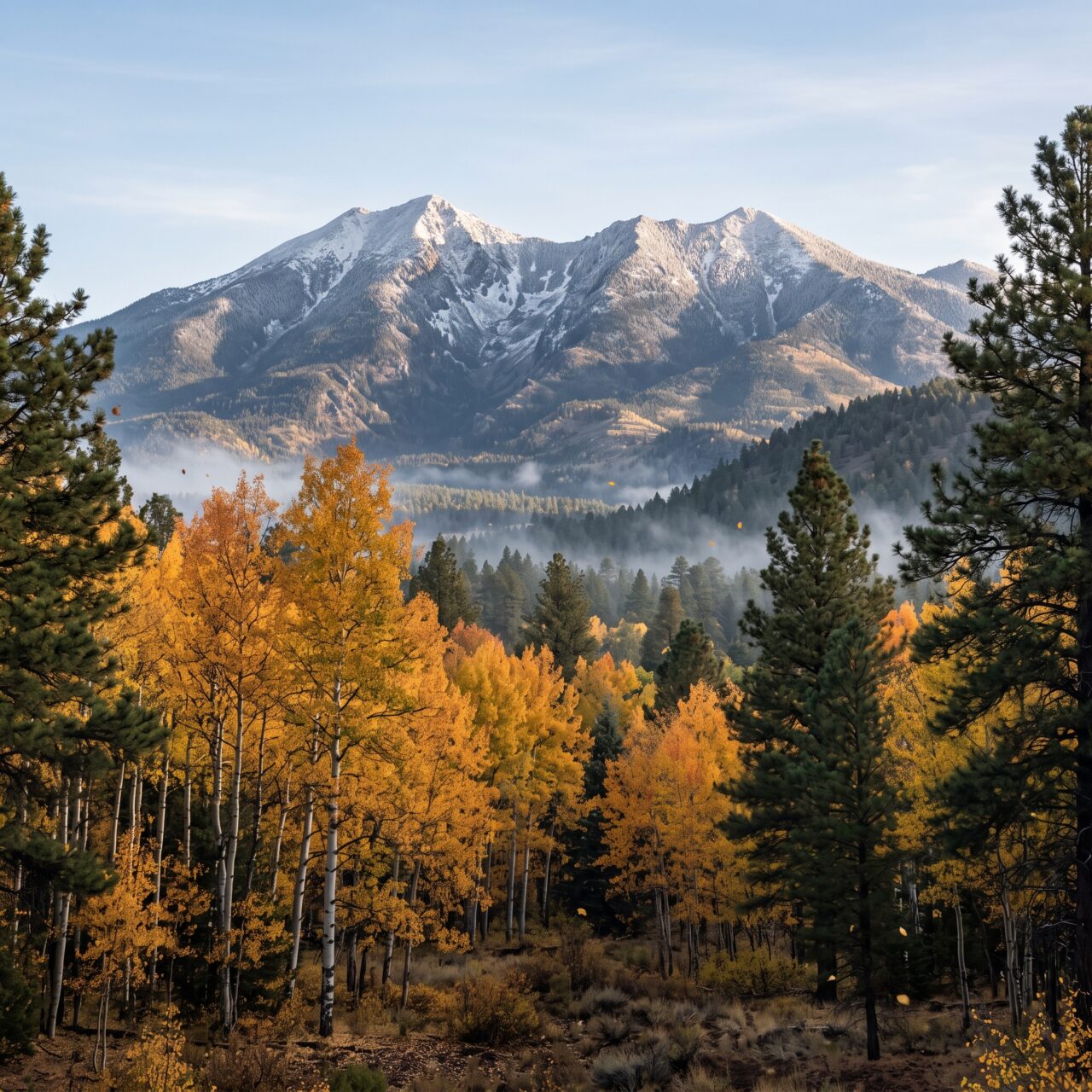
On the last Tuesday of September, Flagstaff woke up to a white line across the top of the San Francisco Peaks. Arizona Snowbowl picked up about two inches overnight – not enough to ski, but plenty to remind all of us what comes next.
That same week, something else happened that got far less attention around town. The average 30-year mortgage rate crossed 7% for the first time since January 2025.
Snow on the Peaks and rates over 7%. Those two facts shape every real estate decision in Flagstaff between now and spring.
Last month I wrote about why fall is Flagstaff’s best-kept real estate secret. That’s still true. But the ground has shifted a little in the four weeks since, and I owe you an honest update. So this month, I’m not going to tell you it’s the perfect time to buy. I’m going to give you a game plan — for buyers, sellers, and everyone who already owns a home here — for the six weeks before winter really arrives.
Because in Flagstaff, the calendar has a hard edge. The city’s winter parking rules start November 1. Snowbowl opens November 20. And once the first real storm buries the roofs and the driveways, a lot of what you need to know about a house disappears under the snow until April.
What Changed in the Last 30 Days: Rates Crossed 7%
Here’s the number every buyer should know this month. According to Freddie Mac’s weekly survey, the average 30-year fixed rate was 7.28% on October 1, up from 7.03% the week before and 6.34% a year ago. The 15-year fixed averaged 6.60%.
Rates had been climbing for weeks before that. They rose through August and September and kept going after the Federal Reserve’s mid-September move. Most forecasters I follow expect them to hover around 7% for the rest of the year — not crash, not spike, just stay stubborn.
What does that mean in real dollars? Let’s use a typical Flagstaff home. The median sale price over the past six months sits around $660,750, according to Resideline’s September 2026 data. With 20% down, that’s a loan of about $528,600.
| 30-year fixed rate | Monthly principal & interest | When |
|---|---|---|
| 6.34% | about $3,286 | One year ago |
| 7.03% | about $3,527 | September 24, 2026 |
| 7.28% | about $3,617 | October 1, 2026 |
Principal and interest only, on a $528,600 loan. Taxes, insurance and HOA dues come on top.
That’s roughly $331 more every month than a year ago — close to $4,000 a year — for the same house. Put another way, the payment that bought a $660,000 home last October now buys about a $600,000 home.
I’m not sharing this to scare anyone off. I’m sharing it because the buyers who do well this winter will be the ones who run the real numbers early, not the ones who find out at the lender’s desk. You can plug in your own figures with my mortgage calculator.
And here’s the part people miss: higher rates thin out the competition. Some of the buyers you’d have been bidding against in May have stepped aside. That changes what you can ask a seller for — which I’ll get to in a moment.
Where the Flagstaff Market Stands Right Now
The short version: prices are holding, homes are taking longer to sell, and buyers have more room to negotiate than they’ve had in years.
Prices are steady, not falling. Redfin’s mid-year review put Flagstaff’s median sale price at $682,889 for the first half of 2026, down about 2% from a year earlier. Resideline’s September data puts the six-month median at $660,750. That’s a flat market, not a falling one — and in Flagstaff, where land is scarce and people keep wanting to live here, flat is normal.
The range is wide. The middle half of Flagstaff sales runs from roughly $460,000 to $930,000. A condo near downtown and a Fort Valley home on acreage live in completely different markets. A citywide median tells you where the market sits, not what your house is worth. That’s what a home valuation is for.
Homes are sitting longer. Redfin’s numbers show a median of about 59 days on market through mid-year, nearly nine days longer than a year ago. Active listings were up about 4% and months of supply sat near 4.9. By the end of September, Movoto counted 162 price reductions across roughly 820 active listings.
Closings are quick once a deal is signed. Accepted contracts are closing in a median of about 29 days. That matters if you’re trying to be settled before the holidays — an offer accepted in late October can still close before Thanksgiving week.
Put it together and you get a market that rewards preparation and patience on both sides. It’s not 2021. Nobody needs to waive inspections or write love letters. But well-priced, well-prepared homes still sell — and they still get the best offers.
For Buyers: How to Win With 7% Rates
You can’t control the bond market. You can control how you negotiate and what you inspect. Here’s where I’d focus.
Ask the seller to help with your rate. With homes sitting longer, many sellers would rather pay toward your financing than cut their list price. A seller-paid 2-1 buydown is the one I’m discussing most this fall. On the loan above, it would drop the first year’s rate to about 5.28% (roughly $2,929 a month) and the second year’s to about 6.28% (roughly $3,265) before settling at the full rate. It’s temporary, and your lender will still qualify you at the full rate — but it buys you breathing room, and if rates fall later, you can refinance.
Ask for closing costs, too. A home that’s been on the market for 60 days with a price reduction is a different conversation than a new listing. Closing cost credits, repair credits, and a later closing date are all on the table right now.
Shop more than one lender. When rates move a quarter point in a week, the spread between lenders gets wider too. Get at least two or three written Loan Estimates, and talk to your lender about when to lock.
Be careful with adjustable-rate loans. More buyers are looking at ARMs with fixed rates above 7%. They can make sense if you’re sure you’ll sell or refinance within a few years. Just make sure you understand exactly how high the payment could go.
Verify insurance before you’re committed. As I wrote in July after the Pocket Fire, homeowners insurance in our forested neighborhoods can make or break a deal. Get a real quote during your inspection period, not the week before closing.
Your October Inspection Checklist: See It Before the Snow Covers It
This is the real Flagstaff advantage of buying in October. Once a storm drops a foot of snow, your inspector can’t see the roof, the grading, or which way water runs off the lot. Right now, you can see all of it. When we tour homes this month, here’s what I want us looking at:
- The roof and gutters. Age, condition, and any sign of past ice damming along the eaves. Flagstaff roofs carry real snow loads, and repairs don’t happen in January.
- Heating — all of it. Furnace or boiler age and service records, plus any wood stove, pellet stove, or fireplace insert. Ask what the fuel is. Many homes outside city limits run on propane, and that changes your monthly costs.
- Windows, doors and insulation. Drafty single-pane windows at 7,000 feet are a winter-long expense. Ask the sellers for a year of utility bills.
- The driveway. Which way does it face? A south-facing driveway melts off on its own; a steep north-facing one can stay icy for weeks. Picture getting up it at 7 a.m. in February.
- Pipes, wells and septic. Look for exposed plumbing in crawlspaces or garages. In areas like Doney Park and Fort Valley, ask whether the home is on a well or septic system and how they’re protected from freezing.
- Who plows the road. City street, county road, HOA, or a private road the neighbors share? This one question tells you more about winter life in a home than almost anything else.
- Drainage. Snowmelt has to go somewhere. Check that the ground slopes away from the foundation and look for water staining in the basement or crawlspace.
None of these should scare you off a good home. They should shape your offer, your repair requests, and your first-winter budget. If you’re buying for the first time, my guide to buying your first home in Flagstaff walks through the whole process.
For Sellers: List Before Thanksgiving, or Wait for Spring?
I get this question every October, and this year the answer depends more than ever on your situation. Here’s how I’d think it through.
List now if your home is ready and your price is right. The buyers out looking in late October and November aren’t browsing. They’re relocating for a job at NAU or the hospital, closing out a 1031 exchange, or tired of renting through another winter. And with fewer listings competing for them, a well-presented home stands out.
Photograph it now, even if you list later. Golden aspens, blue sky, and a dry roof make for the best listing photos of the year. Snow-covered listing photos can be beautiful, but they also hide the yard, the roof, and the driveway — and buyers know it. If there’s any chance you’ll sell this winter or early spring, take the exterior photos before the first big storm.
Price for today’s buyer, not last spring’s. A buyer paying 7.28% has a smaller budget than the same buyer had a year ago. Homes priced to match the market are still selling. Homes priced on hope are the ones collecting those 162 price reductions.
Consider offering a rate buydown instead of a price cut. A few thousand dollars toward a buyer’s rate can lower their payment more than the same amount off your price. It’s a strategy worth running the numbers on together.
Get winter-ready for showings. Keep walks and the driveway clear and salted. Keep the heat comfortable even when you’re out. Turn on every light for afternoon showings, since it’s dark before 5:30 by mid-November. And have your utility bills ready — winter buyers will ask.
Waiting for spring is a fair choice — just know the trade-off. You’ll carry the home through another winter, and you’ll list into the season when the most sellers are competing. If you’re leaning toward spring, now is the time to plan the updates that matter. My post on the 10 updates that actually increase value (and 5 that don’t) is a good place to start, and a few of those projects are much easier to finish before the snow.
For Homeowners: Two November 1 Deadlines and a Winter Checklist
Even if you’re not going anywhere, the next few weeks matter. Two dates catch Flagstaff homeowners every year.
Property taxes. The first half of your 2026 property taxes was due October 1. Under Arizona law, it becomes delinquent after 5 p.m. on November 1. Because November 1 falls on a Sunday this year, the deadline moves to 5 p.m. on Monday, November 2. Miss it and interest starts at 16% a year. If your taxes aren’t paid through your mortgage escrow and you haven’t seen your notice, call the Coconino County Treasurer’s Office now.
Winter parking. From November 1 through April 1, the City of Flagstaff prohibits parking on city streets and alleys from midnight to 7 a.m., with shorter 3 a.m. hours on some downtown streets. Cars get ticketed when it’s dry and can be towed when it’s snowing. In unincorporated county areas, it’s stricter: vehicles, trailers and storage containers can’t sit in county-maintained rights-of-way at any time during the season, with fines starting at $200. If your household has more cars than your driveway holds — or you rent to NAU students — sort that out before the first storm.
Why This Winter Deserves Extra Prep
Forecasters are watching a strengthening El Niño, which NOAA gives better than a 90% chance of becoming a very strong event this fall and winter. El Niño tends to steer more Pacific storms across Arizona. In three of Flagstaff’s last four El Niño winters, snowfall came in at or above normal. During the last one, 2023/24, Snowbowl recorded 281 inches.
Nothing is guaranteed — an El Niño shifts the odds, not the outcome. But it’s a good year to be ready rather than surprised.
Your Pre-Winter Home Checklist
- Clean gutters and clear pine needles off the roof — that’s fire prevention in summer and ice-dam prevention in winter.
- Have the furnace or boiler serviced and replace the filter.
- Have the chimney or wood stove flue inspected and swept before the first fire.
- Disconnect hoses, shut off exterior spigots, and drain irrigation lines.
- Insulate exposed pipes in crawlspaces, garages and outside walls.
- Test smoke and carbon monoxide detectors.
- Stock ice melt and a good shovel, and line up snow removal if you travel or can’t shovel yourself.
- Seal drafts around doors and windows.
- Review your homeowners insurance renewal. Confirm your dwelling coverage reflects today’s rebuilding costs, not what you paid.
One more thought for owners: if you’re happy in your home with a fixed-rate mortgage, today’s rates barely touch you. If you’re thinking of moving up in a year or two, this is a good winter to quietly get your home ready — and to ask me what it would sell for today.
Winter Living, Neighborhood by Neighborhood
Every Flagstaff neighborhood handles winter a little differently. If you’re shopping this season, these are the questions I’d ask in each.
University Heights, Cheshire and Coconino Estates. Closer to town, on city streets, with shorter drives to work, school and NAU. Ask how the street ranks on the city’s plow priority list, and where you’ll park overnight under the winter ordinance.
Ponderosa Trails and Walnut Meadows. Established neighborhoods where winter is generally easy to manage. Look closely at driveway slope and orientation, which vary more than you’d expect street to street.
Doney Park and Fort Valley. More land, more sky, and more self-reliance. Ask about county versus private road maintenance, the fuel source for heat, and whether the home is on a well and septic system. A tractor or plow service may become your best friend.
Kachina Village. Forested and quiet, with real value right now. Ask who maintains the roads, check for the county’s no-parking rules on your street, and pair your winter questions with the insurance homework I covered in July.
Forest Highlands and Flagstaff Ranch. Ask the HOA how snow removal works, what it costs, and how it’s handled for owners who are away part of the winter.
A Note From 52 Flagstaff Winters
I’ve lived here since 1974, and I’ve seen just about every kind of winter this mountain can deliver. The big ones, the dry ones, the ones that dumped three feet in a weekend and melted by Tuesday.
Here’s what I’ve learned: the people who love living in Flagstaff are the ones who planned for winter before it arrived. They knew which way their driveway faced. They had the furnace serviced in October. They bought a home that fit the way they actually live from November through March.
That’s what I want for you — whether you’re buying your first home, selling a home you’ve loved, or just getting the one you own ready for the snow.
Your Next Step
If you’re thinking about buying this winter, let’s sit down before the first big storm. We’ll run your real numbers at today’s rates, talk about which sellers might help with your financing, and tour homes while we can still see the roofs. Buyer consultations are always free, with no obligation.
If you’re thinking about selling — this fall or next spring — I’ll prepare a complimentary home valuation and an honest recommendation on timing. Sometimes the right answer is “list now.” Sometimes it’s “wait, and here’s what to fix first.” Either way, you’ll have a plan.
The snow is already on the Peaks. Let’s get you ready before it reaches the driveway.
JoAnna Ignace Broker Associate | Coldwell Banker Northland
123 W Birch, Ste 106, Flagstaff, AZ 86001
(928) 774-3319
yourflagstaffhome.com
License: BR521251000 (AZ)
Follow JoAnna on Facebook · Instagram · LinkedIn · YouTube
Published: October 2026 · 10-minute read
This post is for informational purposes only and is not financial, tax, legal or insurance advice. Mortgage payment examples are estimates of principal and interest only. Please consult a licensed lender, tax professional or insurance agent about your situation.
Sources (for Charles — not for publication)
- Rates: Freddie Mac PMMS via Trading Economics (7.28% Oct 1; 7.03% Sep 24; 6.34% a year ago); Fed move and year-end outlook: Norada, Oct 1
- Market: Redfin mid-year review via Stacker; Resideline, Sept 2026; Movoto, Sept 30
- Snow: Unofficial Networks, Sept snow; Snowbowl, Nov 20 opening; Snowbowl El Niño post (281 in. in 2023/24); Newsweek, NOAA >90%; AZFamily, Flagstaff El Niño winters
- Taxes: A.R.S. 42-18052 (incl. weekend rule); Coconino County FAQ (16% interest)
- Parking: Arizona Daily Sun; Coconino County ordinance
- Payment math: computed on a $528,600 loan (80% of $660,750), 30-year amortization.